Tony Was 44 and Coaching Little League. Stage 4 Colon Cancer Changed Everything.
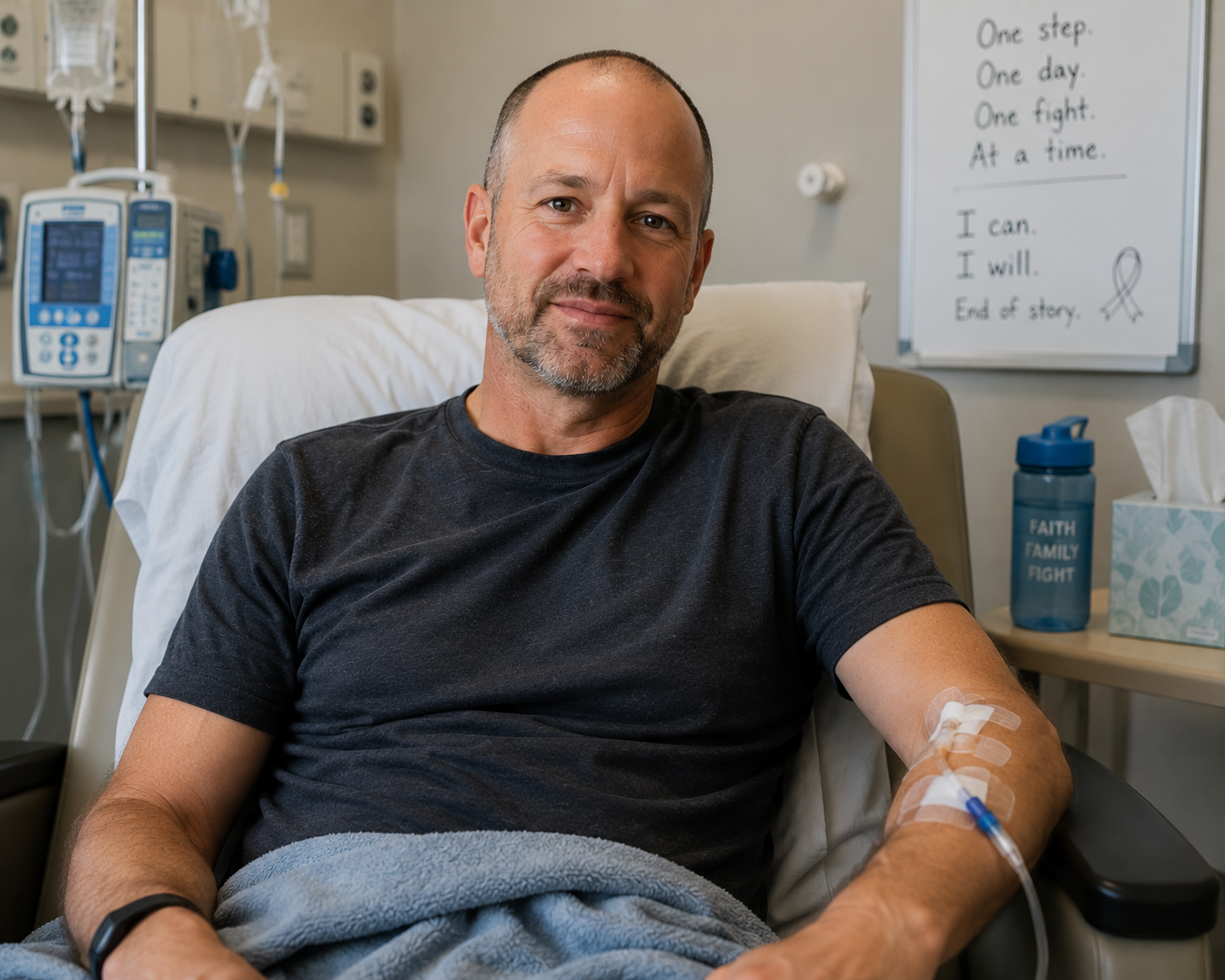
Tony Rivers ran five miles every morning before his family woke up.
He was back home, showered, and making pancakes by the time his three kids came downstairs. He had done this for eleven years — the same route through the same neighborhood streets, the same playlist, the same finish at the corner of Oak and Miller where he would stop his watch and allow himself thirty seconds of satisfaction before turning back toward the house.
He was 44 years old, five-foot-eleven, one hundred and eighty-two pounds. He had not missed a day of work in six years. He coached his son’s Little League team on Saturday mornings and his daughter’s soccer team on Tuesday evenings. He ate well because his wife, Denise, cooked well. He did not smoke. He drank a beer occasionally on Friday nights.
He was, by every visible measure, one of the healthiest people he knew.
The blood in his stool started in March. He Googled it and read about hemorrhoids. He told himself that was what it was. He did not tell Denise. He waited six weeks and it did not go away. He waited another three weeks and it got worse. He told himself he would make an appointment after the Little League season ended.
Denise found the search history on the shared family tablet in April. She made him an appointment herself and told him he was going on Saturday whether he wanted to or not.
The colonoscopy found a large tumor in his sigmoid colon. The subsequent scans found metastases in his liver — three of them, spread across both lobes. Stage 4 colorectal cancer. Tony was 44 years old and had just coached his son’s team to their first winning season.
The Cancer That Hides Until It Can’t
Colorectal cancer is the second leading cause of cancer death in the United States. It is also one of the most preventable cancers — regular screening colonoscopies can detect precancerous polyps before they become malignant — and one of the most treatable when caught early. The tragedy of colon cancer, repeated in thousands of cases every year, is that it is so often caught late because its early symptoms are easy to dismiss and because many people avoid or delay screening.
The American Cancer Society recommends that average-risk adults begin regular colon cancer screening at age 45. Tony was 44. He had never had a colonoscopy. He had never been told he needed one yet.
His oncologist explained that the tumor in his colon had likely been growing for several years before producing any symptoms. By the time the blood appeared, it had already sent cancer cells to his liver.
“She told me that if I had come in a year earlier we might be having a very different conversation,” Tony says. He is quiet for a moment. “I think about that a lot. I try not to, because it doesn’t change anything. But I think about it.”
Stage 4 colorectal cancer is not curable in the traditional sense. The goal of treatment is to control the disease, shrink the tumors, extend life, and — in some cases where liver metastases respond well enough to treatment — potentially make surgical removal possible. That last possibility is the one Tony is fighting toward.
“His oncologist told us that some patients with liver mets become surgical candidates after chemotherapy,” Denise says. “That became our target. That’s the thing we wake up thinking about every morning.”
FOLFOX, Avastin, and the Body That Keeps Showing Up
Tony began chemotherapy three weeks after diagnosis. His regimen is FOLFOX — a combination of three chemotherapy drugs delivered over 46 hours every two weeks — plus bevacizumab, a targeted therapy drug that works by cutting off the blood supply to tumors. He carries a portable infusion pump home from the clinic every other Thursday and disconnects it himself on Saturday afternoon, a process he has now done fourteen times.
He stopped running the morning after his first infusion. The neuropathy — a burning, electric tingling in his hands and feet that is a known side effect of one of the FOLFOX drugs — made it impossible to wear running shoes comfortably, let alone run in them. He walks now instead, shorter distances, and on the days when the neuropathy is bad he sits on the porch and watches the street where he used to run and tells himself it is temporary.
The fatigue has been significant. The nausea has been managed but not eliminated. He has lost twenty-one pounds since diagnosis, which alarms him more than almost anything else — Tony Rivers has been the same weight since his late twenties, and the body in the mirror is one he does not entirely recognize.
He has not missed a single one of his son’s Little League games. He sits in the bleachers with a blanket over his lap on cold days and sunscreen on his face on hot ones, and he cheers loudly enough that his son can hear him from the outfield, and after the games his son comes and sits next to him and they talk about what went well and what needs work, the same conversation they have always had, unchanged.
“I made a decision early on,” Tony says. “I decided that cancer was going to change some things but it was not going to change who I was to my kids. They were going to have their dad. Maybe a slower, tireder version of their dad, but their dad. That was non-negotiable.”
After eight cycles of chemotherapy — four months of treatment — Tony had a CT scan. The primary tumor in his colon had decreased significantly in size. Two of the three liver metastases had shrunk. The third had not grown.
His surgical team met to discuss his case. They told him he was not yet a surgical candidate but that the trajectory was encouraging. They recommended four more cycles and then a repeat evaluation.
Tony went home and made pancakes.
Denise, and the Weight That Doesn’t Show on a Scale
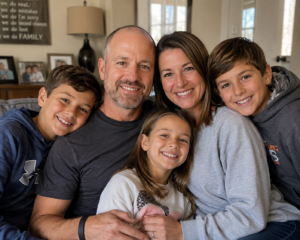
Denise Rivers is a dental hygienist. She works four days a week at a practice twenty minutes from their home in Columbus, Ohio. She has three children — sixteen, thirteen, and nine — a husband who is receiving chemotherapy every two weeks, a mortgage, and a dog named Biscuit who needs walking twice a day regardless of what else is happening.
She has not slept more than six consecutive hours since March.
“I don’t say that for sympathy,” she says quickly, in the way of someone who has been through enough to know what sounds like self-pity and is determined to avoid it. “I say it because I think people don’t understand what a cancer diagnosis does to a whole family. Tony is the one going through treatment. I know that. But the rest of us are going through something too. We’re just going through it quietly.”
The financial impact arrived quickly and has not let up. Tony works in logistics management. His employer has been supportive — he has kept his health insurance and has been able to work remotely on the days he feels well enough — but his productivity has dropped significantly, and there have been quiet conversations about his role that Denise knows about and Tony tries not to dwell on.
The out-of-pocket medical costs — deductibles, co-pays for the bevacizumab which requires separate authorization, the CT scans every eight weeks, the blood draws before every cycle, the anti-nausea medications, the compression gloves for the neuropathy — have totaled over $18,000 in six months. The four additional cycles Tony needs before his next surgical evaluation will add several thousand more.
They have used their savings. They have borrowed from Denise’s parents. They have had the conversation that no couple in their mid-forties expects to have — the conversation about what happens if Tony’s income disappears entirely, about what the insurance covers if he can no longer work, about the things they were going to do when the kids were grown that may need to be reconsidered.
“We had plans,” Denise says simply. “We had a lot of plans. We’re adjusting.”
“I’m not done,” Tony says, and there is nothing dramatic in the way he says it — it is simply a statement of fact, delivered with the same matter-of-fact certainty he brings to everything. “I have not run my last mile. I have not coached my last game. I have not made my last batch of pancakes. I am going to beat this thing or I am going to make it wish it had picked someone easier. Either way, I’m not done.”
His youngest, who is nine years old, has started waking up early on mornings when Tony feels well enough to walk. She puts on her sneakers without being asked and walks beside him, matching her pace to his, talking about whatever nine-year-olds talk about at 6am — her teacher, her friends, a book she is reading, a dream she had. Tony says these walks are the best part of his week. He says this without hesitation.
He is four months into a fight that will likely last at least another year. He is doing it with the same discipline and consistency with which he approached everything else in his life — showing up, every day, regardless of how he feels, because showing up is what Tony Rivers does.
If Tony’s story moved you, please consider donating to his fund. Every dollar goes directly to his family — helping cover the mounting medical costs, easing the financial pressure on Denise, and giving Tony the space to focus entirely on getting well. He showed up for his family every single day before this diagnosis. Your donation helps his family show up for him now.
Help Tony by sharing this story
Sharing costs nothing and could bring Tony the support they need.


Be the first to leave a message
Share a word of support, encouragement, or solidarity below.